Why Your AI Can't Deliver: The Data Stack Rebuild Every Enterprise Needs
Enterprises have spent two years proving that generative AI can work. The harder, more expensive lesson of 2026 is why it so often does not. Gartner’s recent survey of...

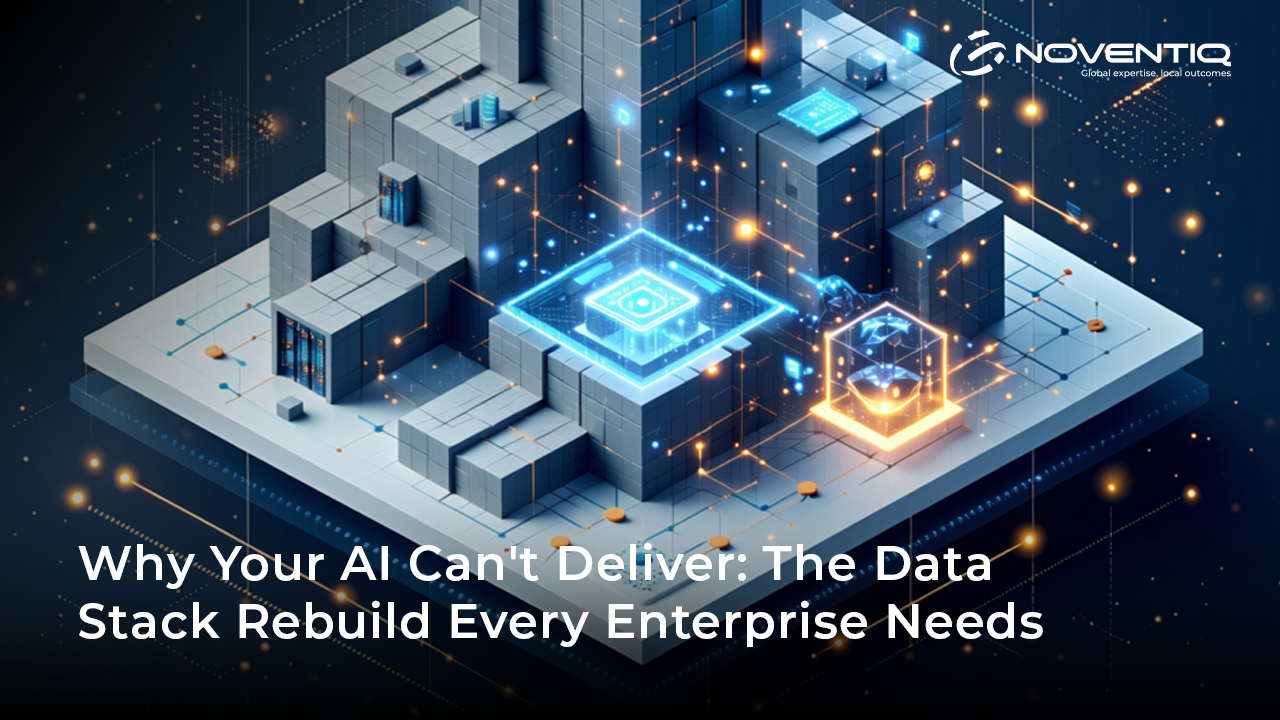
Enterprises have spent two years proving that generative AI can work. The harder, more expensive lesson of 2026 is why it so often does not. Gartner’s recent survey of...
Per-token prices have collapsed over 90% since 2023. So why has your AI bill doubled?
The Kingdom of Saudi Arabia is getting its first AWS Cloud Infrastructure Region, and now is the time to prepare, together with Noventiq.
AWS named a Leader in the 2026 Gartner Magic Quadrant for Desktop as a Service and the 2026 IDC MarketScape, giving customers who are rethinking on-premises VDI a clearer, lower-risk path to cloud desktops.
Generative AI has moved from experiment to foundational technology. It now drafts your communications, answers your customers and increasingly takes actions on your behalf. With that reach comes a category of risk that most organisations are only beginning to understand, and the newly released OWASP Top 10 for Large Language Model Applications 2026 offers the clearest guidance yet on where the real exposure lies. What makes this edition different is that it is grounded not in expert opinion alone but in the record of what has actually gone wrong in the field.
Interest in agentic AI is surging — and not just among large enterprises. Small and medium-sized businesses see the same promise: AI that does not merely answer questions, but perceives, reasons, acts, and learns. The appeal is obvious. The execution, however, is where most SMBs stumble.
For years, VMware has underpinned enterprise IT. But shifting licensing terms, rising costs and vendor uncertainty are prompting CIOs, CFOs and CISOs to rethink that dependency. The challenge is that migrating VMware workloads has traditionally been slow, risky and expensive. Tangled dependencies, undocumented environments and scarce institutional knowledge all conspire to stall progress. AWS Transform changes that equation, using agentic AI to help organisations retire legacy platforms and move to the cloud with far greater speed and confidence.
A joint solution by Noventiq and Ververica
The cloud has reshaped how organisations build, ship, and scale. But that same elasticity – ephemeral workloads, distributed services, constantly changing configurations – is exactly what makes cloud security a moving target. You cannot defend what you cannot see, and you cannot improve what you have not measured.
AWS has introduced a new billing capability that changes how you manage your cloud environment when working with a reseller like Noventiq. Here is what it means for you.


